

In 1888, the Cavalry Journal was born into a world measured in hoofbeats.
The U.S. Army was scattered across the American frontier. Cavalry formations rode vast distances, scouting hostile territory, and screening friendly forces. Horses were not just modes of transportation. They were combat power that gave commanders speed, reach, and initiative. As emerging technologies began to challenge the horse’s role in warfare, officers needed a forum to debate the future of mounted combat. The Journal of the United States Cavalry Association became that essential space for sharing tactics, lessons learned and shaping strategy.
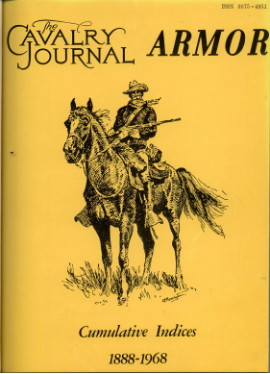
In his 2013 ARMOR article, “The Horse Cavalry in the United States”, retired Lieutenant Colonel Allan B. Bluestone argues that this moment was not the end of an era, but a beginning. He traces how cavalry, like the journal itself, faced disruption, uncertainty, and renewal.
At the time, few could have imagined that cavalry’s greatest strength was not the horse, but its ability to evolve beyond it.
One of the most revealing moments came in 1916 during the Punitive Expedition into Mexico. Cavalry units pursued Pancho Villa across harsh terrain, performing the same reconnaissance and security missions cavalry had executed for generations. But something new appeared alongside them: motor vehicles. Steel and engines moved beside flesh and blood. The future had arrived. The Cavalry Journal, once written exclusively for horsemen, became a place where leaders confronted an uncomfortable reality. The mission remained essential, but the platform was changing.
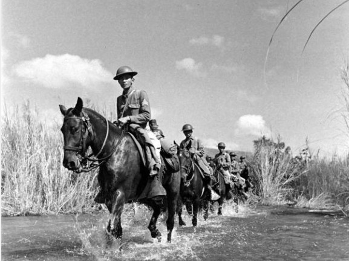
That transition unfolded over decades, culminating in World War II. The 26th Cavalry Regiment, Philippine Scouts, conducted the last mounted cavalry charge in U.S. Army history in 1942. Facing overwhelming Japanese forces, they fought mounted and dismounted, delaying the enemy long enough to support the larger defense of Bataan. It was a final stable call. Not a failure, but a handoff. Cavalry was not dying. It was transforming.
The journal evolved alongside it.
In 1947, the publication became The Armored Cavalry Journal, reflecting a branch caught between tradition and transformation. Cavalry identity endured, but armored vehicles now carried its mission forward. Just three years later, the journal became simply ARMOR. The new name reflected more than modernization. It symbolized the union of cavalry tradition and armored warfare into one profession.
Bluestone makes clear that cavalry was never defined by the horse. It was defined by its functions: reconnaissance, mobility, and decisive advantage. Tanks, like horses before them, became the means to preserve those functions. Armored cavalry formations screened advancing forces in Europe, provided early warning along the Cold War frontier, and led maneuver across Iraq during Desert Storm. Today, cavalry formations integrate drones, sensors, and digital networks to extend the commander’s reach even further.
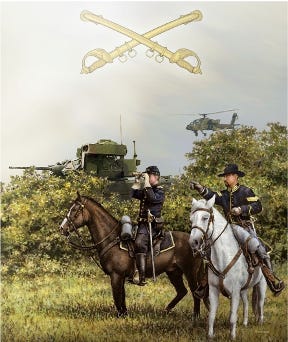
The tools have changed. The mission has not.
Reading Bluestone’s article reminded me that the evolution of cavalry and the evolution of ARMOR magazine are inseparable. The journal did not merely document change. It enabled it. It gave Soldiers a place to debate the future, share lessons, and shape the profession. Just as cavalry adapted to remain relevant, ARMOR adapted to remain the voice of the branch.
The question was never whether cavalry would survive.
The question was whether cavalry would adapt.
History answered clearly.
The horse gave way to horsepower. Steel replaced saddle. Sensors now extend beyond line of sight. Cavalry endures because its purpose endures. Today’s cavalrymen inherit not just new technology, but the responsibility to continue its evolution.
As long as warfare demands leaders who can see first, understand first, and act first, cavalry and ARMOR will carry its voice forward and remain at the forefront of the fight.
CPT Nate Green is an Armor Officer and the current Harding Fellow operating as the military EIC for ARMOR.
