


At the height of the Cold War, the unassuming Chairman of the Office of National Estimates stood in front of a roomful of seasoned intelligence analysts—men who had survived wartime intelligence-gathering missions, decrypted enemy communications, and regularly briefed generals—and asked a question that has reverberated through the intelligence community ever since: what does “probably” mean? The assembled group, who all dealt in certainty for a living, couldn’t agree on a single answer. Their estimates of what “probably” actually meant ranged from a 20 percent chance of a thing happening all the way up to an 80 percent chance, a gap wide enough to start a war…or avoid one.
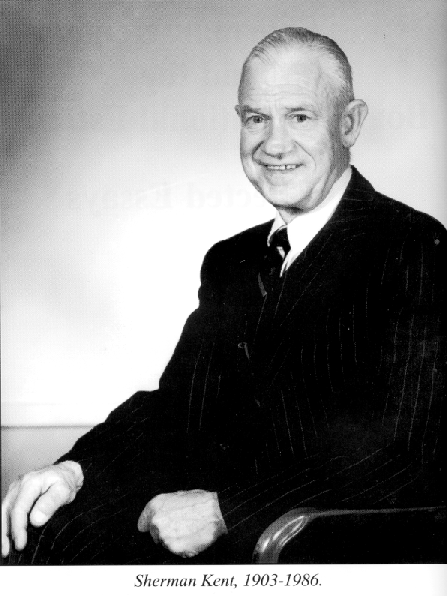
The man who had posed the question, Dr. Sherman Kent—Yale historian, wartime intelligence officer, and arguably the most rigorous analytical mind in the room—was alarmed by this discrepancy. He believed that analytical judgment was only as sound as the reasoning behind it, and that reasoning was only as good as the language used to express it. The revelation that the greatest national and military intelligence minds in the country couldn’t agree on what a simple estimative word meant wasn’t just alarming to Dr. Kent. It was unacceptable. So, he did what any good academic would do in that situation: he wrote a paper about it.
The paper, published in 1964 in the CIA journal Studies in Intelligence, had exactly the kind of title you would expect from a Yale historian working for a government agency: “Words of Estimative Probability.”1 The solution it proposed, however, was elegantly simple: to eliminate linguistic ambiguity, standard estimative language must have agreed-upon numerical probability ranges. “Certain” should indicate a 100 percent certainty; “almost certain” should be a probability of 93 plus or minus 6 percent; “probably” should be 75 plus or minus 12percent; and so on, all the way down to “almost certainly not” with a probability of 7 plus or minus 5 percent (see figure below). Intelligence professionals would, at last, be working from a shared vocabulary, eliminating the dangerous guesswork that happened when producers and consumers of intelligence read the same word and arrived at entirely different numbers.
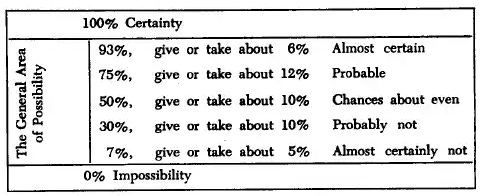
Figure. Sherman Kent’s proposed probability ranges
Of course, there was pushback. Some analysts resisted what they saw as an attempt to impose false precision on an inherently uncertain craft. Others acknowledged the need for linguistic uniformity and enthusiastically embraced Dr. Kent’s suggestions. To some extent, this linguistic skirmish has continued to the present day. However, Kent’s core insight—that vague language in analytical writing isn’t just lazy; it’s downright irresponsible—has subtly shaped analytic tradecraft standards from America’s military intelligence enterprise to the broader NATO intelligence community ever since.
Thumbing through back issues of the Military Intelligence Professional Bulletin with Dr. Kent’s paper on wordcrafting in mind is enlightening. A careful hedge here, a precisely chosen qualifier there, the deliberate distinction between “indicate” and “suggest”—none of these is the result of random chance. They are the thoughtful descendants of a historian’s argument 60 years ago that the words analysts choose are as vital to quality analysis as the analysis itself. Dr. Kent served in wartime, but he didn’t carry a weapon. Instead, he carried a metaphorical red pen, using it to shed light on the rigor authors owe their readers.
“Throwback Thursday” isn’t just about looking back. It’s also an opportunity to recognize which lessons from the past continue to influence modern military practice. In professional military writing, whether you’re drafting a report, presenting the results of months of research, or writing for one of our journals, say what you mean and mean what you say. Your readers will thank you for it—probably.
Endnotes
1. Sherman Kent, “Words of Estimative Probability,” Studies in Intelligence 8, no.4 (1964), https://www.cia.gov/readingroom/docs/CIA-RDP93T01132R000100020036-3.pdf. Declassified May 4, 2012.
Ms. Lorilynn Iversen is an editor for the Military Intelligence Professional Bulletin, the professional journal of the U.S. Army Military Intelligence Corps.


Great work from the MIPB Team!
More than likely I enjoyed this post.